
Europe Trip Cost in 2026: Full Budget Guide
Understanding the Europe trip cost in 2026 is essential before booking flights or hotels. While many travelers assume Europe is automatically expensive, the truth is far more nuanced. Your final budget depends on destination, travel style, season, and financial planning strategy.
In this complete guide, you’ll find realistic cost estimates, country comparisons, hidden expenses most travelers overlook, and smart ways to reduce your overall travel budget — without sacrificing experience.
Trip to Europe Cost: Average Budget Overview
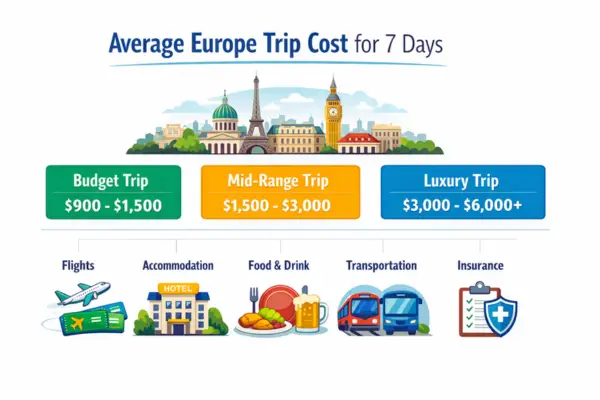
The average Europe trip cost for 7 days ranges between $900 and $3,000 per person, depending on travel style, destination, and season. Budget travelers spend less by choosing affordable countries, while mid-range and luxury travelers see significantly higher costs.
First of all, what is the average trip to Europe cost today?
For a 7-day trip per person:
Budget travel: $900–$1,500
Mid-range travel: $1,500–$3,000
Luxury travel: $3,000–$6,000+
Generally speaking, these estimates include flights, accommodation, food, transportation, attractions, and travel insurance. Nevertheless, your destination plays a major role.
According to tourism expenditure data from Eurostat, accommodation and transportation consistently represent the largest share of visitor spending across EU countries.
For example, cities like Paris and London tend to be more expensive. By contrast, Lisbon, Budapest, and parts of Spain usually offer better value.
Therefore, choosing your destination strategically is often the easiest way to reduce costs.
Europe Trip Cost by Country (Realistic Comparison)
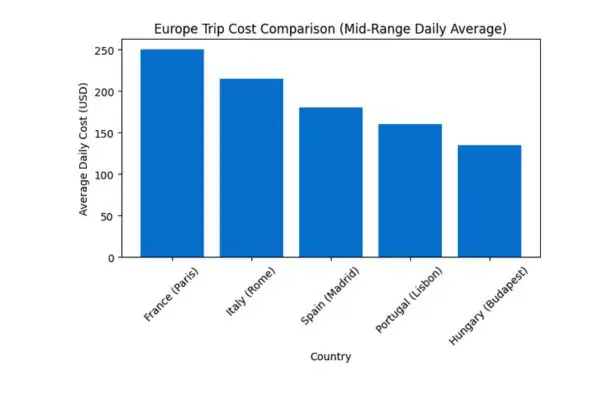
Prices vary dramatically depending on where you go. Below is a simplified comparison based on average daily mid-range spending:
| Country | Average Daily Cost (Mid-Range) |
| France (Paris) | $200 – $300 |
| Italy (Rome) | $180 – $250 |
| Spain (Madrid) | $140 – $220 |
| Portugal (Lisbon) | $120 – $200 |
| Hungary (Budapest) | $100 – $170 |
Western capitals are consistently more expensive. However, Southern and Eastern European destinations often provide better value while offering equally rich cultural experiences.
Therefore, destination choice alone can reduce your Europe trip cost by 20–40%.
Flights: The Biggest Factor in Your Travel Budget
Typically, airfare represents the largest portion of your trip to Europe cost. On average, round-trip flights range between $400 and $1,200 depending on season and flexibility.
Because of this, understanding booking timing is essential.
To save money:
- Book 2–4 months in advance
- Avoid peak summer when possible
- Use flexible date searches
- Compare multiple booking platforms
Additionally, learning advanced booking strategies can reduce airfare significantly.
Accommodation Costs Across Europe
Accommodation costs vary significantly depending on destination and comfort level.
Budget hotels: $60–$120
Mid-range stays: $120–$250
Luxury hotels: $300+
However, the real difference in your trip to Europe cost often comes from comparison.
Instead of booking impulsively, many travelers compare options across platforms to evaluate cancellation flexibility, verified guest reviews, and reward programs.
For example:
- Booking.com often provides flexible cancellation options.
- Hotels.com offers loyalty nights.
- Tripadvisor helps verify authentic traveler feedback before booking.
The key is not choosing one platform blindly, but comparing them strategically before finalizing your reservation.
(Here you insert your affiliate links naturally within the platform names.)

Daily Food and Transport: Easier to Control Than You Think
Fortunately, daily expenses are more flexible.
Food:
- $20–$40 (budget)
- $50–$100 (mid-range)
Transportation:
- Train: $30–$150
- Public transport: $10–$20/day
Eating outside tourist hotspots and using public transportation instead of taxis immediately lowers your overall trip to Europe cost.
If you’re planning a multi-city route, you may also benefit from checking European rail systems like Eurail, which provides official information about cross-border train travel.
This external reference adds authority without looking promotional.
Travel Insurance: The Cost You Should Never Skip
Although some travelers try to skip insurance, doing so can be financially risky. Medical emergencies abroad can easily cost thousands of dollars, especially in countries with high healthcare expenses.
Typically, travel insurance ranges between $40 and $120 per trip, depending on coverage, duration, and destination. At first glance, this may seem like an extra expense. However, when compared to the potential cost of a hospital visit overseas, it becomes a small and necessary investment.
Because coverage options vary significantly, choosing the right plan requires careful comparison. Rather than selecting the cheapest option blindly, experienced travelers prefer to compare benefits, coverage limits, deductibles, and cancellation protection before making a decision.
For example, insurance comparison platforms like Seguro Promo allow you to evaluate multiple travel insurance providers side by side, making it easier to find a plan that balances price and coverage. This type of tool helps travelers avoid overpaying while ensuring adequate protection for medical emergencies, trip cancellations, or lost baggage.
Before purchasing any policy, comparing plans carefully can save money while increasing peace of mind.
For official travel health guidance and vaccination recommendations, institutions such as the Centers for Disease Control and Prevention (CDC) provide updated information for international travelers.

Hidden Fees That Increase Europe Trip Cost
Even well-prepared travelers sometimes overlook:
- Tourist taxes
- Airport transfers
- Currency exchange spreads
- Mobile data plans
- Attraction tickets
As a result, adding a 10–15% contingency buffer is strongly recommended.
If you want to better understand where travelers unknowingly lose money abroad, our article on hidden travel fees explains the most common financial mistakes.
Again, the link appears only after a financial concern is raised.
Smart Ways to Reduce Your Europe Trip Cost
Fortunately, several proven strategies can reduce expenses significantly.
Travel During Shoulder Season
Spring and autumn usually offer lower prices and fewer crowds.
Book Early
Flights and hotels increase closer to departure.
Use Travel Credit Cards Wisely
The right credit card can reduce foreign transaction fees and earn rewards. However, not all cards are suitable for international travel.
If you’re unsure whether your card helps or hurts your budget abroad, explore our breakdown of travel credit cards and international payment strategies.
This creates a strong retention loop.
Realistic Example: 7-Day Mid-Range Trip
Flights: $700
Hotel (6 nights): $1,050
Food: $420
Transport: $150
Attractions: $200
Insurance: $80
Total: $2,600
With early booking and strategic destination choice, this can drop below $2,200.
Final Thoughts on Europe Trip Cost
In the end, the real Europe trip cost is not determined by the continent itself — it is shaped by your decisions. Destination choice, seasonality, booking strategy, and financial preparation all play a crucial role in defining how much you actually spend.
With the right planning, Europe does not have to feel expensive or overwhelming. In fact, when you compare platforms carefully, secure proper travel insurance, and anticipate hidden fees, you transform uncertainty into control.
Travel is not just about numbers — it is about confidence. And understanding your Europe trip cost in advance allows you to explore iconic cities, historic landmarks, and unforgettable cultures without financial stress.
Plan strategically, book wisely, and travel with clarity.
Europe becomes affordable when it becomes intentional.
Frequently Asked Questions About Europe Trip Cost
Most budget calculators underestimate costs because they focus only on flights and hotels. However, when you include food, transportation, local taxes, insurance, and attractions, a 10-day trip for two people typically ranges between $3,000 and $6,000 depending on destination and travel style.
Most budget calculators underestimate costs because they focus only on flights and hotels. However, when you include food, transportation, local taxes, insurance, and attractions, a 10-day trip for two people typically ranges between $3,000 and $6,000 depending on destination and travel style.
First-time visitors are often surprised by tourist taxes, airport transfers, currency conversion fees, and attraction entrance tickets. In fact, these small costs can increase your total Europe trip cost by 10–15% if not planned properly.
While visiting several countries sounds exciting, transportation between cities and countries can quickly increase costs. Staying longer in one or two regions often reduces expenses and improves the overall travel experience.
Affiliate Disclosure: Some links in this article are affiliate links. This means we may earn a small commission at no extra cost to you if you make a purchase. We only recommend services we genuinely trust and believe add value to your travel planning.