
Quanto Custa Viajar para a Europa em 2026? Orçamento Real
Entender quanto custa viajar para a Europa em 2026 é essencial antes de comprar passagens ou reservar hotéis. No entanto, um dos maiores erros que os viajantes cometem é presumir que a Europa é automaticamente cara, sem entender para onde o dinheiro realmente vai.
Na prática, o seu orçamento final depende muito mais da escolha do destino, do estilo de viagem, da época do ano e da estratégia de planejamento do que a maioria imagina. Em alguns casos, dois viajantes que visitam a Europa no mesmo mês acabam gastando valores completamente diferentes por causa de pequenas decisões financeiras tomadas antes do embarque.
Por isso, entender os custos reais por trás das passagens, hospedagem, transporte, seguro e taxas escondidas de viagem se torna fundamental muito antes de a viagem começar.
Neste guia completo, você vai encontrar estimativas realistas de custo, comparações entre países, gastos ocultos que a maioria dos viajantes ignora e formas práticas de reduzir o custo da sua viagem à Europa — sem abrir mão de conforto ou experiência.
Quanto Custa uma Viagem à Europa: Visão Geral do Orçamento Médio
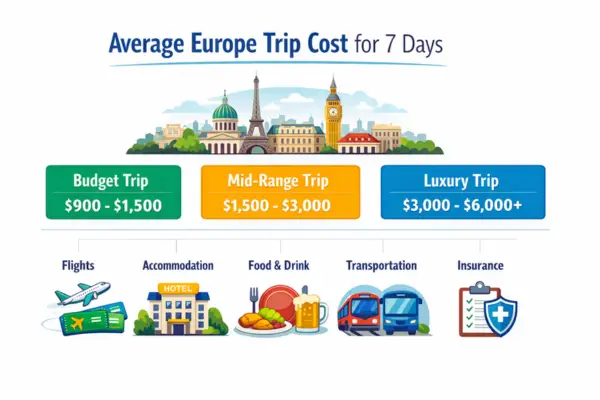
O custo médio de uma viagem à Europa de 7 dias varia entre US$ 900 e US$ 3.000 por pessoa, dependendo do estilo de viagem, do destino e da temporada. Viajantes econômicos gastam menos ao escolher países mais baratos, enquanto quem viaja no padrão intermediário ou de luxo tem custos bem mais altos.
Antes de tudo, quanto custa, em média, uma viagem à Europa hoje?
Para uma viagem de 7 dias por pessoa:
- Viagem econômica: US$ 900–US$ 1.500
- Viagem intermediária: US$ 1.500–US$ 3.000
- Viagem de luxo: US$ 3.000–US$ 6.000+
De modo geral, essas estimativas incluem passagens, hospedagem, alimentação, transporte, atrações e seguro viagem. Ainda assim, o destino tem um papel decisivo.
Segundo dados de gastos com turismo do Eurostat, hospedagem e transporte representam de forma consistente a maior parte dos gastos dos visitantes nos países da União Europeia.
Por exemplo, cidades como Paris e Londres tendem a ser mais caras. Em contrapartida, Lisboa, Budapeste e algumas regiões da Espanha costumam oferecer um melhor custo-benefício.
Portanto, escolher o destino de forma estratégica costuma ser a maneira mais fácil de reduzir custos.
Custo de Viagem à Europa por País (Comparação Realista)
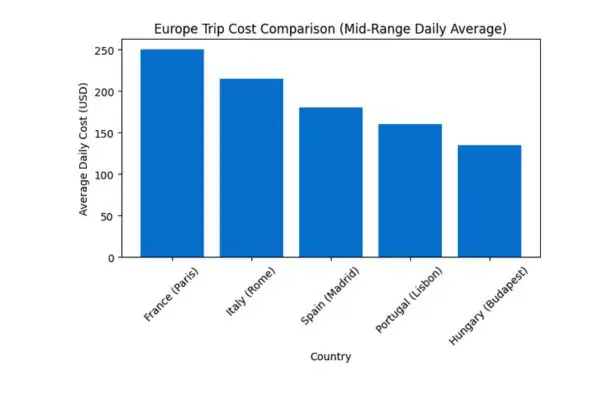
Os preços variam muito dependendo de para onde você vai. Abaixo está uma comparação simplificada com base no gasto diário médio no padrão intermediário:
| País | Custo Diário Médio (Intermediário) |
| França (Paris) | US$ 200 – US$ 300 |
| Itália (Roma) | US$ 180 – US$ 250 |
| Espanha (Madri) | US$ 140 – US$ 220 |
| Portugal (Lisboa) | US$ 120 – US$ 200 |
| Hungria (Budapeste) | US$ 100 – US$ 170 |
As capitais da Europa Ocidental são sempre mais caras. No entanto, destinos do Sul e do Leste Europeu costumam oferecer um custo-benefício melhor, com experiências culturais igualmente ricas.
Assim, só a escolha do destino já pode reduzir o custo da sua viagem à Europa em 20% a 40%.
Os Erros na Compra de Passagens Que Aumentam o Custo da Viagem à Europa
Normalmente, a passagem aérea representa a maior fatia do custo da viagem à Europa. Porém, o que muitos viajantes não percebem é que o momento da compra, a flexibilidade e os aeroportos de destino podem mudar drasticamente o preço final.
Em muitos casos, o viajante acaba pagando centenas de dólares a mais simplesmente por comprar por impulso ou ignorar datas flexíveis.
Por isso, entender a estratégia de compra se torna tão importante quanto escolher o destino em si.
Em média, as passagens de ida e volta variam entre US$ 400 e US$ 1.200, dependendo da temporada e da flexibilidade.
Para economizar:
- Compre com 2 a 4 meses de antecedência
- Evite o pico do verão sempre que possível
- Use buscas com datas flexíveis
- Compare várias plataformas de reserva
Além disso, aprender estratégias avançadas de compra de passagens pode reduzir bastante o valor da tarifa aérea.
Custos de Hospedagem pela Europa
Os custos de hospedagem variam bastante conforme o destino e o nível de conforto.
Hotéis econômicos: US$ 60–US$ 120
Estadias intermediárias: US$ 120–US$ 250
Hotéis de luxo: US$ 300+
Porém, a real diferença no custo da sua viagem à Europa muitas vezes vem da comparação.
Em vez de reservar por impulso, muitos viajantes comparam as opções entre plataformas para avaliar a flexibilidade de cancelamento, as avaliações verificadas de hóspedes e os programas de recompensa.
Por exemplo:
- Booking.com costuma oferecer opções de cancelamento flexíveis.
- Hotels.com oferece diárias de fidelidade.
- Tripadvisor ajuda a verificar avaliações autênticas de viajantes antes de reservar.
O segredo não é escolher uma plataforma às cegas, e sim compará-las de forma estratégica antes de finalizar a sua reserva.

Alimentação e Transporte Diários: Mais Fáceis de Controlar do Que Você Pensa
Felizmente, os gastos diários são mais flexíveis do que a maioria dos viajantes espera.
Alimentação:
- US$ 20–US$ 40 (econômico)
- US$ 50–US$ 100 (intermediário)
Transporte:
- Trem: US$ 30–US$ 150
- Transporte público: US$ 10–US$ 20/dia
Na prática, comer fora dos pontos turísticos e usar transporte público em vez de táxi reduz imediatamente o custo total da sua viagem à Europa.
Se você está planejando um roteiro por várias cidades, também pode valer a pena consultar sistemas ferroviários europeus como o Eurail, que traz informações oficiais sobre viagens de trem entre países.
Seguro Viagem: O Custo Que Você Nunca Deve Cortar
Embora alguns viajantes tentem economizar dispensando o seguro, fazer isso pode ser um risco financeiro. Emergências médicas no exterior podem facilmente custar milhares de dólares, especialmente em países com custos de saúde elevados.
Normalmente, o seguro viagem custa entre US$ 40 e US$ 120 por viagem, dependendo da cobertura, da duração e do destino. À primeira vista, pode parecer um gasto extra. No entanto, comparado ao custo potencial de uma internação no exterior, ele se torna um investimento pequeno e necessário.
Como as opções de cobertura variam bastante, escolher o plano certo exige uma comparação cuidadosa. Em vez de escolher a opção mais barata às cegas, viajantes experientes preferem comparar benefícios, limites de cobertura, franquias e proteção contra cancelamento antes de decidir.
Por exemplo, plataformas de comparação de seguros como Seguro Promo permitem avaliar vários seguros viagem lado a lado, facilitando encontrar um plano que equilibre preço e cobertura. Esse tipo de ferramenta ajuda o viajante a evitar pagar caro demais, garantindo proteção adequada para emergências médicas, cancelamentos de viagem ou extravio de bagagem.
Antes de contratar qualquer apólice, comparar os planos com calma pode economizar dinheiro e trazer mais tranquilidade.
Para orientações oficiais de saúde em viagens e recomendações de vacinação, instituições como o Centers for Disease Control and Prevention (CDC) fornecem informações atualizadas para viajantes internacionais.

Taxas Escondidas Que Aumentam o Custo da Viagem à Europa
Mesmo viajantes bem preparados às vezes deixam passar:
- Taxas de turismo
- Traslados de aeroporto
- Spreads na conversão de moeda
- Planos de dados móveis
- Ingressos para atrações
Como resultado, é altamente recomendável reservar uma margem de contingência de 10% a 15%.
Se você quer entender melhor onde os viajantes perdem dinheiro sem perceber no exterior, nosso artigo sobre taxas escondidas em viagens explica os erros financeiros mais comuns.
Formas Inteligentes de Reduzir o Custo da Sua Viagem à Europa
Felizmente, várias estratégias comprovadas podem reduzir bastante os gastos.
Viaje na Baixa Temporada
A primavera e o outono costumam oferecer preços mais baixos e menos multidões.
Reserve com Antecedência
Passagens e hotéis ficam mais caros à medida que a data se aproxima.
Use Cartões de Crédito de Viagem com Sabedoria
O cartão certo pode reduzir taxas de transação internacional e gerar recompensas. Porém, nem todos os cartões são adequados para viagens internacionais.
Se você não tem certeza se o seu cartão ajuda ou atrapalha o orçamento no exterior, veja nossa análise sobre cartões de crédito para viagens e estratégias de pagamento internacional.
Exemplo Realista: Viagem Intermediária de 7 Dias
Para entender melhor como esses custos se combinam na prática, vamos ver um exemplo realista de viagem intermediária à Europa, com base nos preços médios atuais.
- Passagens: US$ 700
- Hotel (6 noites): US$ 1.050
- Alimentação: US$ 420
- Transporte: US$ 150
- Atrações: US$ 200
- Seguro: US$ 80
Total: US$ 2.600
Com reserva antecipada e escolha estratégica do destino, esse valor pode cair para menos de US$ 2.200.
Quanto Levar em Espécie vs. Cartão, e um Roteiro Econômico de Exemplo
Como referência prática de gasto diário por pessoa: Portugal fica em torno de €70/dia, Espanha €90/dia e França €100/dia. Uma boa estratégia é dividir seus recursos — por exemplo, 60% em cartão internacional (Wise, Nomad) e 40% em espécie, evitando levar grandes quantias em dinheiro vivo e mantendo parte guardada em local separado e seguro.
Para o roteiro em si, comece por países mais acessíveis como Portugal, Espanha e Hungria. Um exemplo testado de 15 dias é Lisboa > Madrid > Paris, usando trem ou voos low cost entre as cidades — o Omio ajuda a comparar preços de transporte, e o GetYourGuide ou a Civitatis costumam ter tours gratuitos e confiáveis para reservar atrações. Se Madrid estiver no seu roteiro, veja também nosso guia de como viajar barato para a Espanha, e não deixe de conferir os apps essenciais para facilitar sua viagem antes de embarcar. Equilibrar grandes capitais com cidades menores também ajuda a controlar o orçamento, já que elas costumam ser mais baratas e igualmente encantadoras.
Considerações Finais Sobre o Custo da Viagem à Europa
No fim das contas, o real custo de uma viagem à Europa não é definido pelo continente em si — ele é moldado pelas suas decisões. Escolha do destino, época do ano, estratégia de compra e preparação financeira têm um papel crucial em quanto você realmente gasta.
Com o planejamento certo, a Europa não precisa parecer cara ou assustadora. Na verdade, quando você compara plataformas com cuidado, contrata um bom seguro viagem e antecipa as taxas escondidas, transforma a incerteza em controle.
Viajar não é só sobre números — é sobre confiança, clareza e tranquilidade antes de embarcar.
E a verdade é que as melhores viagens pela Europa não são necessariamente as mais caras. Na maioria das vezes, são aquelas planejadas com expectativas realistas, decisões mais inteligentes e menos surpresas financeiras pelo caminho.
Planeje com estratégia, reserve com sabedoria e viaje com confiança.
Porque a Europa fica muito mais acessível quando cada decisão é tomada de forma intencional.
Vai viajar para fora da Europa também, ou quer entender o framework de custos de qualquer viagem internacional? Confira nosso guia completo de quanto custa uma viagem internacional, com simulador e dicas que valem para qualquer destino.
Perguntas Frequentes Sobre o Custo da Viagem à Europa
A maioria das calculadoras de orçamento subestima os custos porque foca apenas em passagens e hotéis. No entanto, quando você inclui alimentação, transporte, taxas locais, seguro e atrações, uma viagem de 10 dias para duas pessoas costuma ficar entre US$ 3.000 e US$ 6.000, dependendo do destino e do estilo de viagem.
Muitos viajantes de primeira viagem subestimam taxas de turismo, traslados de aeroporto, taxas de transação internacional, ingressos para atrações e custos de internet móvel. Embora esses gastos pareçam pequenos individualmente, juntos eles podem aumentar bastante o custo final da viagem à Europa.
Embora visitar vários países pareça empolgante, o transporte entre cidades e países pode aumentar rapidamente os custos. Em muitos casos, ficar mais tempo em uma ou duas regiões reduz os gastos e ainda proporciona uma experiência de viagem mais tranquila e agradável.
Aviso de Afiliados: Alguns links neste artigo são links de afiliado. Isso significa que podemos receber uma pequena comissão, sem custo adicional para você, caso faça uma compra. Só recomendamos serviços em que realmente confiamos e que acreditamos agregar valor ao seu planejamento de viagem.